When most Brisbane homeowners hear the word “termites,” they immediately think of structural damage and expensive repairs. While this concern is valid for certain species, the reality is far more nuanced. Understanding the true nature of termites in South-East Queensland can help you make informed decisions about protection while appreciating these remarkable insects’ vital role in our ecosystem.
The Good: Termites as Environmental Heroes
Nature’s Recycling Champions
Termites are among Australia’s most important environmental workers. Of the 350+ termite species found across the continent, the vast majority are beneficial insects that:
- Break down dead wood and organic matter, returning nutrients to the soil
- Aerate soil through their extensive tunnel systems, improving water infiltration and root growth
- Support biodiversity by creating habitats for other species
- Process cellulose that would otherwise accumulate in forests and gardens
The Ecosystem Engineers
In South-East Queensland’s subtropical environment, termites work tirelessly to:
- Decompose fallen branches, leaves, and dead trees
- Create complex underground networks that benefit plant root systems
- Provide food sources for birds, reptiles, and other wildlife
- Maintain the natural balance of forest and garden ecosystems
Finding termites in your garden or in dead trees is actually a sign of a healthy ecosystem. These beneficial species are simply doing their job – cleaning up nature’s debris.
The Bad: When Termites Become Structural Pests
The Destructive Few
While most termites are environmental allies, only 2-3 species in South-East Queensland pose a genuine threat to your home:
Coptotermes acinaciformis (Most destructive)

- Found throughout Brisbane and surrounding areas
- Attacks sound structural timber
- Can cause extensive hidden damage before detection
- Tend to build central nests with sub nests near food sources
- Builds distinctive mud tubes for protection
- Significant economic species
Schedorhinotermes termite species
- Found throughout Brisbane and surrounding areas
- Attacks sound structural timber
- Can cause moderate to extensive hidden damage before detection
- Tend to build Satellite nests that can make baiting programs more challenging.
- Significant economic species.
Heterotermes ferox Species
- Widespread across South-East Queensland
- Mostly cause damage and attack weathered or decaying wood
- Can cause structural damage if undetected over a longer period of time and usually cause damage internally to gyprock and trim timbers.
- Tend to build nests that are visible in gardens, trees etc
- Less significant economic species
Microcertermes species
- Found throughout Brisbane and surrounding areas
- Do not attack sound structural timbers
- Cause minor to moderate damage to weathered or decaying timbers
- Tend to build nests that are visible in gardens, trees etc
- Minor economical species
Why These Species Are Different
Unlike their beneficial cousins, destructive termites:
- Attack sound, structural timber rather than just dead wood
- Can remain hidden while causing extensive damage
- Build large colonies that can support sustained attacks on buildings
- Create mud tubes to travel between soil and food sources
The Downright Expensive: The Real Cost of Termite Damage
The Financial Reality
Termite damage is not covered by standard home insurance policies in Australia, making prevention and early detection crucial. The costs can be staggering:
- Average repair costs: $7,000 – $30,000 per incident
- Severe infestations: $50,000+ in structural repairs
- Complete structural replacement: $100,000+ in extreme cases
- Property devaluation: 10-20% reduction in market value
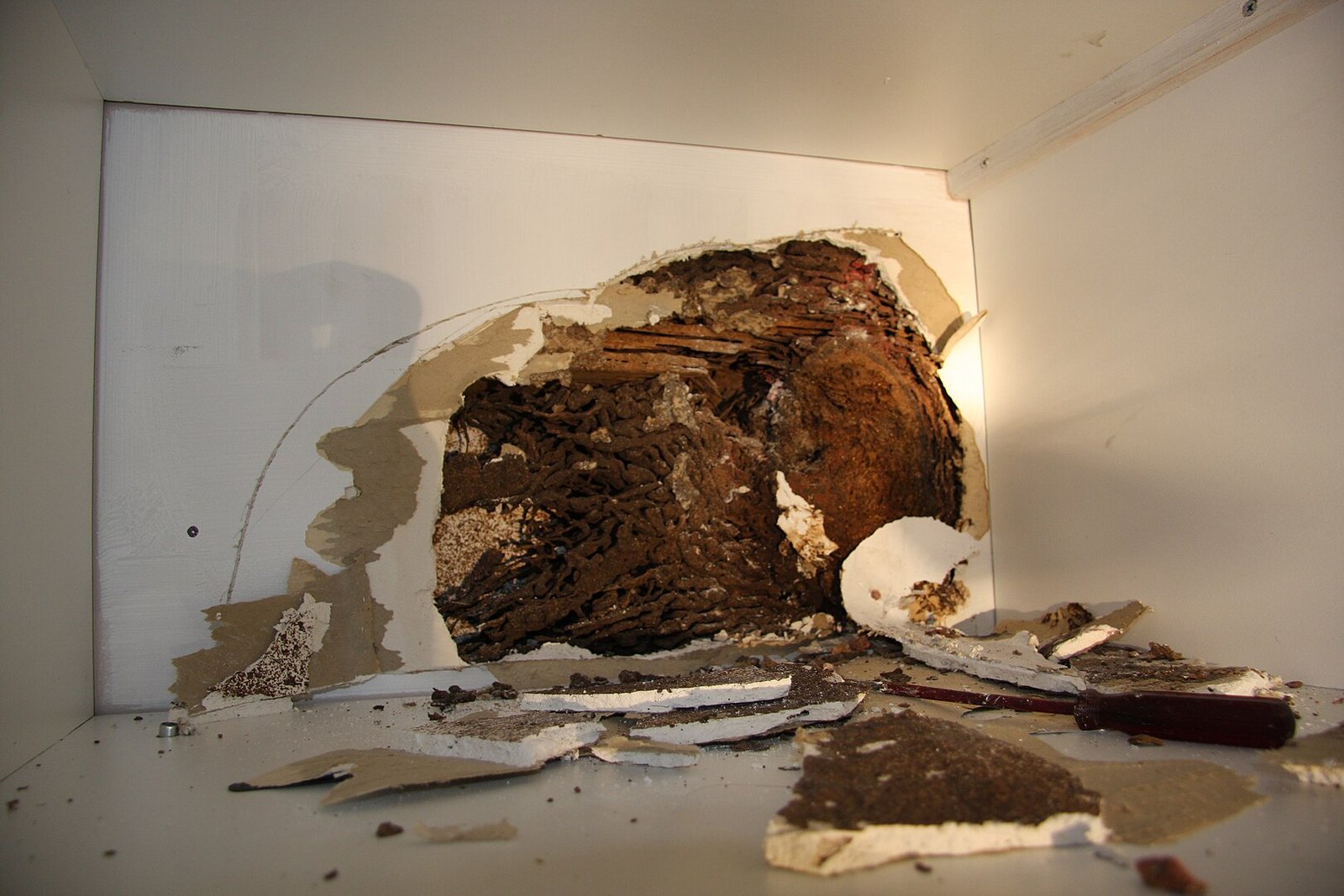
Hidden Damage Scenarios
Termites can cause extensive damage before visible signs appear:
- Structural timber weakening that compromises building integrity
- Floor joist damage leading to sagging or collapsed floors
- Wall frame destruction requiring complete reconstruction
- Roof timber damage affecting the entire structure’s stability
The Brisbane Climate Factor
South-East Queensland’s warm, humid climate creates ideal conditions for termite activity year-round, meaning:
- Colonies remain active during winter months
- Multiple species can coexist in the same area
- Moisture from summer storms provides perfect breeding conditions
- Urban development often brings homes closer to established termite territories
The Necessity of Annual Inspections
Why Annual Inspections Are Critical
Australian Standards (AS 3660) recommend annual termite inspections for good reason:
Early Detection Saves Money
- Termites can cause significant damage in just 3-6 months
- Early intervention typically costs hundreds, not thousands
- Regular monitoring allows for targeted, less invasive treatments
Professional Expertise Matters
- Trained inspectors know where to look for subtle signs
- Specialized equipment detects activity behind walls and under floors
- Experience distinguishes between beneficial and destructive species
Documentation and Peace of Mind
- Annual reports provide insurance for property transactions
- Regular monitoring tracks any changes in termite activity
- Professional advice helps maintain effective prevention strategies
What Annual Inspections Include
A comprehensive termite inspection covers:
- Interior and exterior visual examination of all accessible areas
- Moisture detection around the property perimeter
- Identification of conducive conditions that attract termites
- Assessment of previous treatments and their ongoing effectiveness
- Detailed reporting with photographs and recommendations
Garden Termites: Caution, Not Alarm
When Finding Termites Is Normal
Discovering termites in your garden should prompt caution, not panic:
In Dead Trees and Stumps
- This is completely normal and beneficial
- These termites are processing dead wood
- Depending on the species, prompt action may be required. Identifying the species is crucial at this point and a qualified inspector will be required to do this.
In Garden Mulch
- Termites often process organic mulch materials
- This indicates healthy soil biology
- Monitor to ensure they’re not building mud tubes toward structures
- Avoid mulching up against buildings ensuring at least 300mm clearance around all external walls
In Compost Areas
- Termites help break down organic matter
- This is part of the natural decomposition process
- Keep compost areas away from building foundations
- Regular turning disrupts potential colony establishment
The Caution Approach
When you find garden termites:
- Identify the species (professional inspection recommended)
- Monitor for mud tubes leading toward structures
- Maintain dry perimeters around buildings
- Schedule professional assessment if concerned
- Don’t use DIY treatments that may scatter colonies
Water: The Key to Termite Survival and Prevention
Understanding Termite Water Needs
All termites require moisture to survive, making water management your most powerful prevention tool:
Why Water Matters
- Termites have thin exoskeletons that lose moisture rapidly
- Colonies must maintain connection to soil moisture
- Dry conditions force termites to retreat to deeper, more distant locations
- Eliminating moisture sources makes your property less attractive
Creating Dry Perimeters
Immediate Building Surrounds (0-3 meters)
- Fix leaking taps, pipes, and air conditioning units
- Ensure proper drainage away from foundations
- Remove water-holding containers and debris
- Maintain gap between soil and timber (minimum 75mm clearance)
- Use appropriate ground coverings that don’t retain moisture
Garden and Landscape Management
- Position sprinkler systems to avoid watering near foundations
- Choose appropriate plants that don’t require excessive watering near buildings
- Maintain gutters and downpipes to direct water away from structures
- Address drainage issues that create pooling or boggy areas
Structural Considerations
- Ensure adequate subfloor ventilation to prevent moisture buildup
- Install vapor barriers in crawl spaces where appropriate
- Address rising damp issues promptly
- Maintain weatherproofing around windows, doors, and penetrations
The Science Behind Dry Perimeters
Research shows that maintaining dry conditions around buildings:
- Reduces termite foraging activity by up to 80%
- Forces colonies to establish further from structures
- Makes detection easier as termites must build longer, more visible mud tubes
- Complements chemical barriers by creating multiple deterrent layers
Integrated Termite Management for South-East Queensland
The Balanced Approach
Effective termite management combines:
Professional Monitoring
- Annual inspections by licensed technicians
- Species identification and risk assessment
- Ongoing monitoring of treatment effectiveness
Environmental Management
- Moisture control around buildings
- Removal of conducive conditions
- Landscape design that discourages termite activity
Main termite management treatments
- Chemical soil perimeter and foundation treatments (BASF Termidor & Termidor HE termiticides are recommended)
- Physical barriers during construction or renovation (Homeguard, Protectacote and Termx products are recommended)
- Baiting systems for active infestations (Exterra and BASF Trelona baiting systems are recommended)
Education and Awareness
- Understanding the difference between beneficial and destructive species
- Recognizing early warning signs
- Knowing when professional intervention is necessary
Conclusion: Living Harmoniously with Termites
The truth about termites in South-East Queensland is that they’re neither entirely good nor entirely bad – they’re a natural part of our ecosystem that requires informed management. By understanding which species pose genuine threats, maintaining annual professional inspections, and creating unfavorable conditions around our homes, we can protect our properties while respecting these remarkable insects’ environmental role.
Remember: Finding termites in your garden is normal and often beneficial. Finding them in your home’s structure is a serious concern requiring immediate professional attention. The key is knowing the difference and taking appropriate preventive measures.
Your action plan:
- Schedule annual termite inspections with a licensed professional
- Maintain dry perimeters around your home
- Address moisture issues promptly
- Don’t panic about garden termites – monitor and manage instead
- Invest in prevention rather than waiting for expensive repairs
In South-East Queensland’s termite-active environment, knowledge and prevention are your best investments in protecting both your property and your peace of mind.
*For professional termite inspections and management advice tailored to your Brisbane property, contact our licensed technicians. We understand the local species, climate challenges, and most effective prevention strategies for South-East Queensland homes.*undefined